
NBA Injury Impact on Betting: Missing Player Analysis
 Available in US
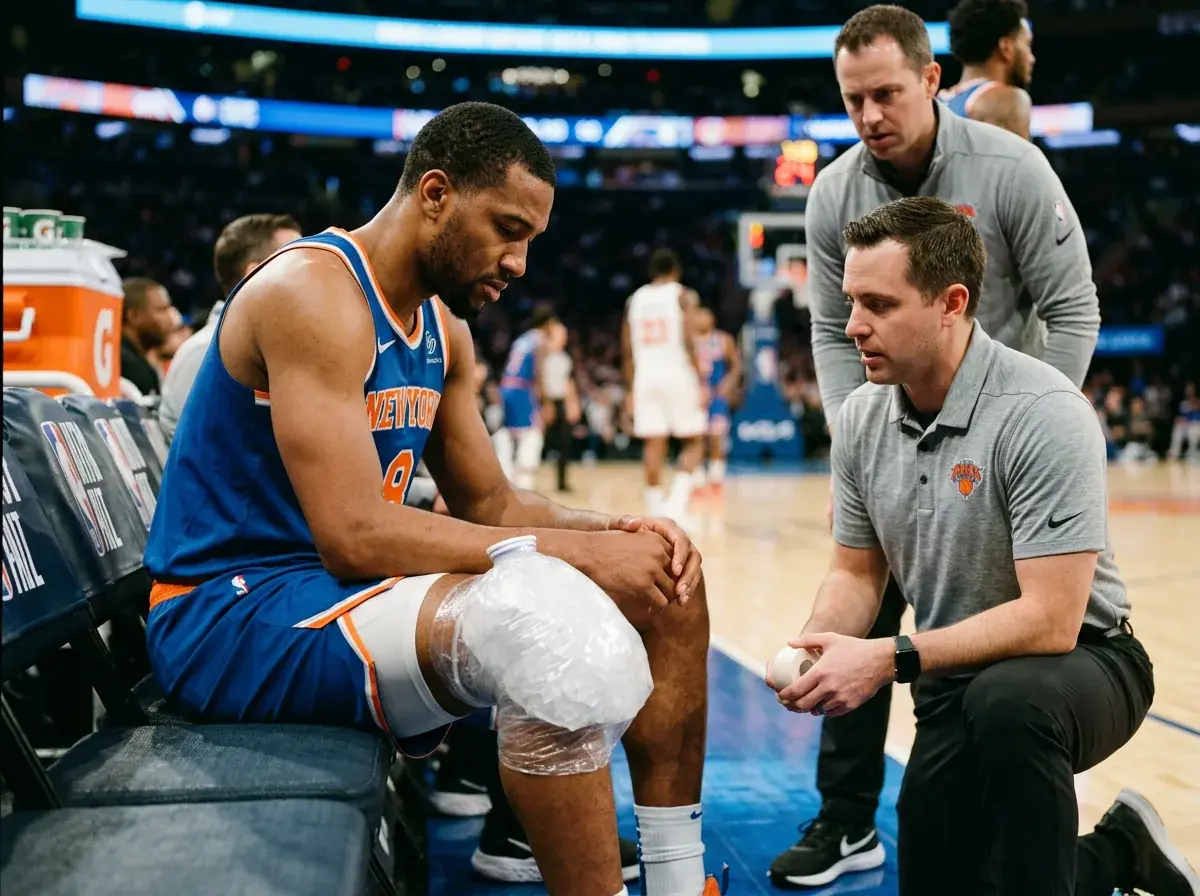
I once bet a spread an hour before tip, confident in my analysis. Twenty minutes later, the star point guard was ruled out with a hamstring tweak that had not been on any injury report. The line moved 4 points against me instantly. That expensive lesson taught me that injury information is currency in NBA betting, and being late to the market means paying the price.
Injuries reshape betting markets faster than any other news category. A single player’s status can move a spread 3-5 points, shift a total by 6-8 points, and completely reframe a game’s expected flow. Understanding how injuries affect lines – and more importantly, how the market sometimes misprices that effect – creates consistent betting opportunities.
Analyzing Star Player Injury Impact on NBA Odds
Not all absences are created equal. The market understands this at a basic level but sometimes miscalibrates the specific impact of individual stars.
Elite scorers move lines the most dramatically. When a 28-point-per-game player is ruled out, the market adjusts the spread by roughly 3-4 points and the total by 5-7 points. That scoring has to come from somewhere – either the team’s other players step up (partially offsetting the loss) or the team’s offense craters (justifying the adjustment).
Defensive anchors get undervalued in injury adjustments. A lockdown defender who does not score much might only move the spread 1-2 points when out. But their absence can affect the total more significantly because the opposing team’s offense gets easier shots. I often find value betting overs when defensive specialists are absent but the market has focused on the spread rather than the total.
Playmakers – point guards who control pace and create for others – have outsized impact beyond their own statistics. When a primary ball handler is out, the entire offensive system changes. Secondary players take on unfamiliar roles. Turnover rates increase. The butterfly effect of losing a playmaker often exceeds what the raw point adjustment captures.
The replacement quality matters enormously. A team with a capable backup point guard losing their starter is different from a team whose backup is barely NBA-caliber. I maintain notes on backup quality across the league, which helps me assess whether injury adjustments are accurate or over/understated.
Injury Report Timing
The NBA injury report has specific release requirements: teams must submit reports by 5 PM local time the day before games, then update by 1:30 PM on game day. But the strategic use of injury designations has made these reports less reliable than they appear.
The “questionable” designation has become nearly meaningless. Teams use it liberally for any player with any minor issue, and the actual game-time decision often does not reflect the designation. A player listed as questionable plays roughly 75% of the time. A player listed as probable plays roughly 95% of the time. I do not bet significantly based on questionable designations until more concrete information emerges.
Late scratches move markets most violently. When a player expected to play is ruled out 30-60 minutes before tip, the market scrambles to adjust. These windows create the most acute mispricings because there is insufficient time for full market equilibration. I monitor injury news obsessively in the hour before games I am interested in.
Load management has added a layer of uncertainty that did not exist a decade ago. Healthy stars sit for rest, often with minimal advance notice. Tracking which teams and which players employ load management – and in which situations – helps anticipate these absences before they are announced.
The injury report’s impact on totals is often delayed relative to its spread impact. When a star is ruled out, bettors immediately adjust spread expectations, but totals adjustments take longer to process. This creates a brief window where totals offer better value than spreads following injury news.
Line Adjustment Patterns
Oddsmakers have developed increasingly sophisticated models for injury adjustment, but patterns of over and under-correction persist.
The market tends to over-adjust for high-profile absences. When a superstar sits, casual money floods the opponent’s side, pushing the line further than actual on-court impact warrants. Depth charts exist for a reason – teams are built to survive individual absences. The 5-point adjustment for missing LeBron might only warrant 3.5 points in actual expected margin change.
Conversely, the market under-adjusts for role player injuries that have schematic implications. A team losing their only true center might only see a 1-point spread move, but their entire defensive approach changes. A team losing their primary three-point specialist might see minimal adjustment, but their spacing suffers in ways that affect every possession.
Multiple absences compound non-linearly. Losing two starters is worse than twice as bad as losing one starter. The third and fourth options being thrust into primary roles creates cascading inefficiency. I weight multi-injury situations more heavily than the sum of individual injury impacts would suggest.
Timing within the season affects adjustment accuracy. Early season injury adjustments are less precise because baseline team performance is still being established. Late season adjustments are more accurate because the market has better data on how teams perform with and without specific players.
Finding Value After Injuries
The value creation from injury news comes in three forms: betting quickly after news breaks, betting against over-corrections, and betting totals when the market focuses on spreads.
Speed matters for the first category. If you can process injury implications faster than the market – understanding who replaces the missing player, how minutes will redistribute, what the schematic impact will be – you can bet before the line fully adjusts. This requires preparation: knowing backup quality, rotation patterns, and coaching tendencies before news breaks.
Betting against over-corrections requires patience. The initial line move after star injury news typically overshoots. Waiting 30-60 minutes for the market to settle often reveals better numbers on the side losing the player. The public overreaction gets corrected, and the true impact crystallizes at a more moderate line.
Totals opportunities arise because injury news affects spread betting psychology more than totals analysis. When a star is ruled out, bettors think “that team will lose” rather than “scoring will change in specific ways.” The spread moves immediately; the total lags. Identifying whether an injury increases or decreases expected total scoring – and betting before the total adjusts – captures that temporary inefficiency.
One pattern I have found profitable: betting overs when a high-usage star is absent. The team loses efficiency, but they also play faster trying to compensate. More possessions, even inefficient ones, produce more combined scoring. This counter-intuitive angle has shown positive returns in my tracking.
Building an Injury Information System
Systematic tracking of injury information transforms random reaction into consistent edge. I have built processes over years that ensure I am never caught off-guard by news the market has already absorbed.
Multiple information sources are essential. Team beat writers often break injury news before official reports. Team social media accounts sometimes leak information. NBA insider accounts aggregate rumors. I follow all of these for teams I bet regularly, creating redundancy that minimizes information gaps.
Pre-game checklists include injury review for both teams in any game I consider betting. I note who is out, who is questionable, and how minutes will redistribute. This preparation means I can assess incoming news against my existing analysis rather than starting from zero.
Historical performance tracking without specific players reveals how teams actually perform versus how the market expects them to perform. Some teams collapse without their star. Others barely notice the absence because their system is coach-driven rather than player-driven. Building this historical database takes time but creates lasting analytical advantage.
The injury landscape connects directly to player prop betting. When a starter is out, the backup’s props are often mis-set because the market uses their bench-level historical stats rather than projecting their starter-level usage. These mis-priced props can offer significant value on game days with significant injury news.
How much do lines move when star players are ruled out?
Elite scorers typically move spreads 3-4 points and totals 5-7 points. Defensive specialists move lines less despite significant on-court impact. The specific adjustment depends on backup quality and team depth – some teams handle absences better than others.
When is the NBA injury report released?
Teams must submit initial reports by 5 PM local time the day before games, then update by 1:30 PM on game day. However, late scratches can occur up until game time. The questionable designation is often unreliable – those players usually play.
Are lines over-adjusted for star player absences?
Generally yes. Public money floods toward opponents of teams missing stars, pushing lines beyond actual impact. The over-correction is most severe for high-profile superstars. Value often exists betting on the team missing the star after the initial market overreaction settles.
Created by the ”Betting Stats nba” editorial team.